

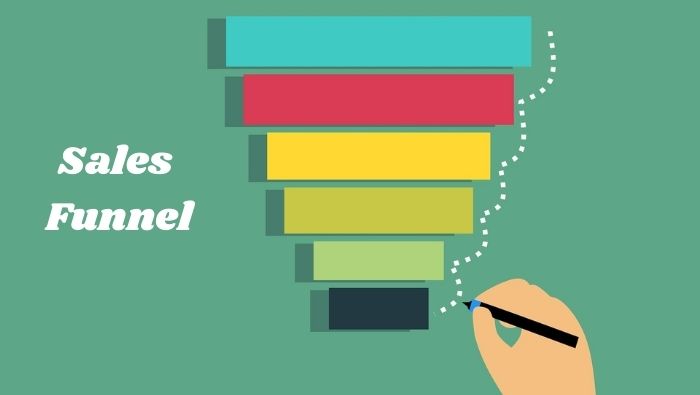
Traditionally, a sales funnel is a buying process your clients go through. However, a funnel can also be a series of products or services you offer, ranging from free to high-end. The aim is to generate interest and build trust. Here is how to build your sales funnel, whether you are new to business or simply looking for a different way to engage prospects.
Why use a sales funnel at all?
Most people do not immediately look to buy your high-end product. You therefore need to build trust and while some customers are instant decision makers, it can take up to seven touches, if not more, before most people buy. The funnel itself can have graduated packages from free to high-end and premium. This graduated approach will help customers decide what they want, if they like it and if they want to move towards buying your higher-end product. It also helps you weed out the non-ideal clients or time wasters.
Where does a sales funnel fit in your marketing process?

Within the customer journey, your sales funnel will fit between ‘nurturing prospects’ and ‘converting sales’. When done well, once your prospects reach the end of the journey, they can become loyal clients and keep returning and/or refer someone new, for the whole process to start again.
The stages of a sales funnel
1. Awareness
For people to buy from you, they need to be aware of your product or service. Even with existing clients who know what you do, if you have something new to offer, you need to make everyone aware of it.
Ideally this first item will be free or very low cost and be of interest to your ideal client. It will also be easy to access with little or no contact with you. That said, whatever you offer at this stage, it will need to be in exchange for contact details so they can go into your nurture campaigns and come through the funnel.
Low cost or free offerings could include:
- Reports with top tips
- Series of videos
- E-books
- Free trials
- Blogs or articles
2. First purchase
This is the most important point because it is the first time someone is committing to your product or service and you have built enough trust for them to make a purchase.
This first purchase needs to be low cost (which will vary in terms of what you are offering) but the important point is that it is no longer free. It also needs to be valuable to the client, which can be achieved by stating your offering is worth much more than you’re charging.
Finally, you want this first purchase to be easy to deliver; something your client can download or that can be purchased and sent via automation.
- Books
- Video courses
- MOTs or audits
- Sample packs/tasters
- 3-month group membership
3. Main product
This main product is your bread and butter, what most of your clients need, your best-selling items and also what you love doing.
By this time, people are already customers, and this is now where they become your client base.
- Work and support services
- 1-2-1 work
- Full membership
- Monthly deliveries
- Ongoing maintenance
4. Premium
Once you have a client base, you can offer your top-of-the-range products which some of them will be interested in. It will just be a case of when they need your premium product and potentially affordability.
Your premium product can be an upsell from the main product. It could be for a limited number of clients because it takes up more of your time, but it should always be something that makes you ‘dance’ when a client buys it.
- Full support
- Exclusive access
- Luxury retreats
- Unlimited use/time
- Done for you
Automation is key
When it comes to processing the free or low-cost offerings you have, automation is key and there are numerous programmes that can help you and make your life easier.
You want to be able to run ads (on Facebook or Google), direct people to a landing page, get them to sign up for the free or low-cost item for them to automatically receive emails and begin their journey through the funnel. So make sure you find out about them, or get a specialist to help you with it, as it will save you lots of time (and therefore money).
Review and renew
Now that you know more about sales funnels, go and check your sales funnel (if you have one) and see what you could do to generate interest. Look at automation, what you could offer for free and research examples of what other people in your industry are doing.
If you feel your products and services are not quite hitting the mark at the moment, it is important to note that ‘failure’ is an event and not a person. Your product is probably exactly what people want. You just might need to tweak your process, help prospects trust you and then buy from you.
Reviewing your sales funnel might be all you need to change.
FURTHER READING
Here are links to some other articles I’ve written that you might find useful:
How would you cope in an emergency
How to recession-proof your business
How to create a flexible workforce
Would you like some help?
Remember that if you need any help with any of this, I’m here for you.
You can arrange a completely free session to see if and how I could help you create a business that gives you the money and the lifestyle you want.
Just email me to arrange a session, or click on the button below.